


Kombucha without white sugar or granulated sugar – is it possible?
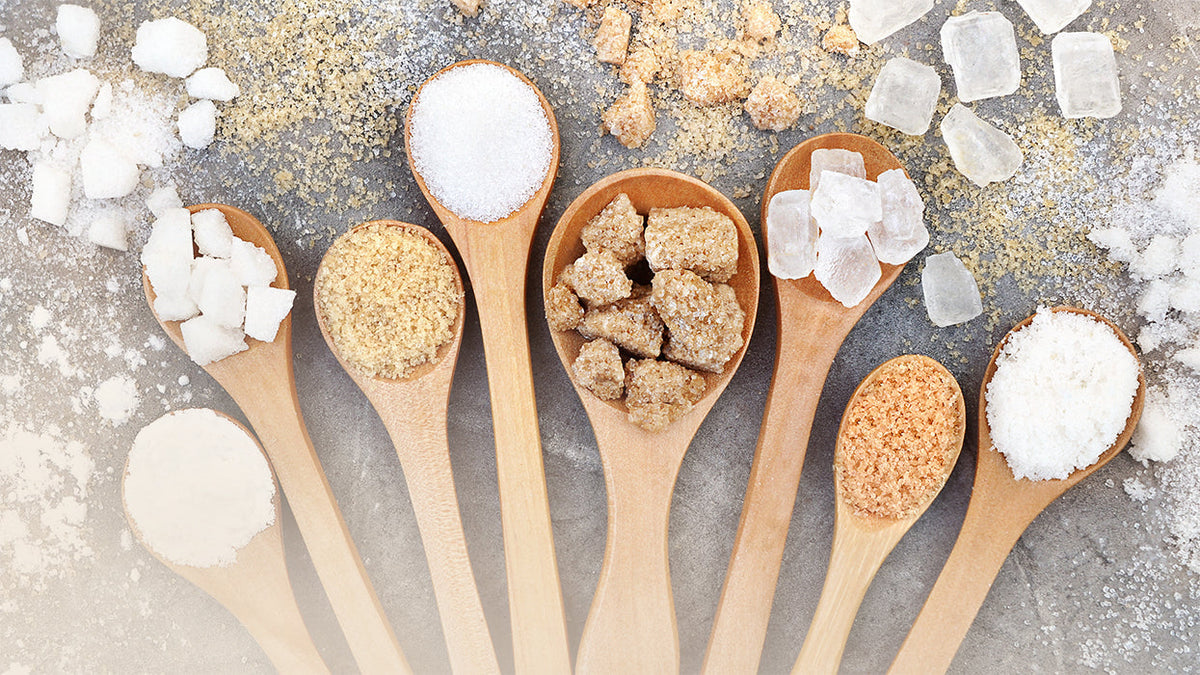
Most kombucha enthusiasts start their tea fungus with regular household sugar, cane sugar, or raw cane sugar. However, there are several alternatives to these conventional types of sugar. The SCOBY needs usable carbohydrates to enable fermentation. Agave nectar, maple syrup, honey, molasses, and coconut blossom sugar also contain sugar. However, these sugar sources differ in their composition. This can change the course of fermentation. How well a specific kombucha culture copes with an alternative and whether an adjustment period is required depends on the individual batch. Taste, acidity development, and fermentation time can also differ. If you want to make kombucha without white sugar, you should therefore experiment carefully and pay close attention to the development of your batch.

Agave Nectar
Agave nectar is a sweetener obtained from the agave plant and consists largely of fructose. Since its composition differs from that of regular household sugar, the course of fermentation can also change. How a specific kombucha culture reacts to it cannot be predicted generally. In addition, agave nectar can give the finished kombucha an interesting, caramel-like flavor note. If you want to try it, observe your batch carefully and use a proven recipe as a starting point.
Maple Syrup
Maple syrup is obtained by reducing maple sap and consists predominantly of sugar. It also contains small amounts of various minerals. Whether and how well a kombucha culture ferments with it depends on the individual batch. Taste and fermentation time may differ from a batch made with household sugar. If you use maple syrup, you should allow plenty of time for observation and check the taste regularly.

Honey
For a traditionally honey-based fermented tea variant, Jun kombucha is well known. Jun is often made with green tea and honey. It is started with a suitable culture and cannot simply be equated with a conventional kombucha starter. Honey is therefore not automatically a suitable substitute for household sugar in your existing kombucha recipe. The types of sugar and other components contained can influence fermentation. Therefore, it is best to use honey with a suitable Jun culture and a recipe designed for it.
Molasses
Molasses is produced during sugar manufacturing and contains minerals in addition to sugar, including iron, calcium, and magnesium. Its composition depends on several factors, including the raw material and manufacturing process. Because of these differences, molasses can influence the fermentation and taste of kombucha. The kombucha can taste stronger, more tart, or more bitter and become sour more quickly. A fixed fermentation time of 7 to 14 days cannot be generally stated: it depends on several factors, including the culture, temperature, recipe, and desired acidity. Therefore, observe the process instead of relying solely on a fixed number of days.

Coconut Blossom Sugar
Coconut blossom sugar consists predominantly of sucrose and can generally be tried as an alternative sugar source. How a specific kombucha culture develops with it depends on the recipe and fermentation conditions. Taste and acidity development can also change with coconut blossom sugar. Therefore, check regularly how your batch develops and do not blindly follow the fermentation time of a recipe made with household sugar.
Which sugar alternative is suitable for kombucha?
If you want to start kombucha without white sugar, it is important to know that not every alternative is equally suitable for every culture. Household sugar is the proven starting point for many classic kombucha recipes. Agave nectar, maple syrup, molasses, and coconut blossom sugar can change the fermentation and taste. Honey is traditionally used more for Jun with a suitable culture. Try changes in a separate batch whenever possible and pay attention to unusual changes, mold, or other signs of improper fermentation. If you see visible mold, you should discard the entire batch.
Frequently Asked Questions about Sugar Alternatives for Kombucha
Can you make kombucha without white sugar?
Yes, there are alternative sugar sources. However, they differ in their composition and can influence fermentation. Use a recipe that is suitable for the respective sugar source and culture whenever possible.
Can I simply replace household sugar with agave nectar or maple syrup?
A direct replacement is not always recommended. The different types of sugar can affect the activity of the culture, the fermentation time, and the taste.
Is honey suitable for every kombucha SCOBY?
No. Honey is often used for Jun, a related fermented tea variant with a suitable culture. For a classic kombucha SCOBY, you should not use honey as an equivalent substitute without suitable instructions.
Does kombucha become sour more quickly with alternative sugar sources?
This cannot be stated generally. Acidity development depends on the sugar source used, the culture, the temperature, and other conditions. Check the batch regularly and do not rely solely on a fixed fermentation time.
The most important things at a glance
- Household sugar is a proven starting point for classic kombucha.
- Agave nectar, maple syrup, molasses, and coconut blossom sugar can change fermentation and taste.
- Honey is traditionally used primarily for Jun with a suitable culture.
- Fermentation time depends on several factors and should not be judged solely by a fixed number of days.


Share:
3 comments
Hat jemand Erfahrung bei der Ansetzung nur mit Dattelzucker?
Habt ihr auch Erfahrung mit Yacon Sirup?
😅Joa, und zwar ziemlich schnell. Innerhalb von 3 Tagen hatte ich Essig ☺️.