

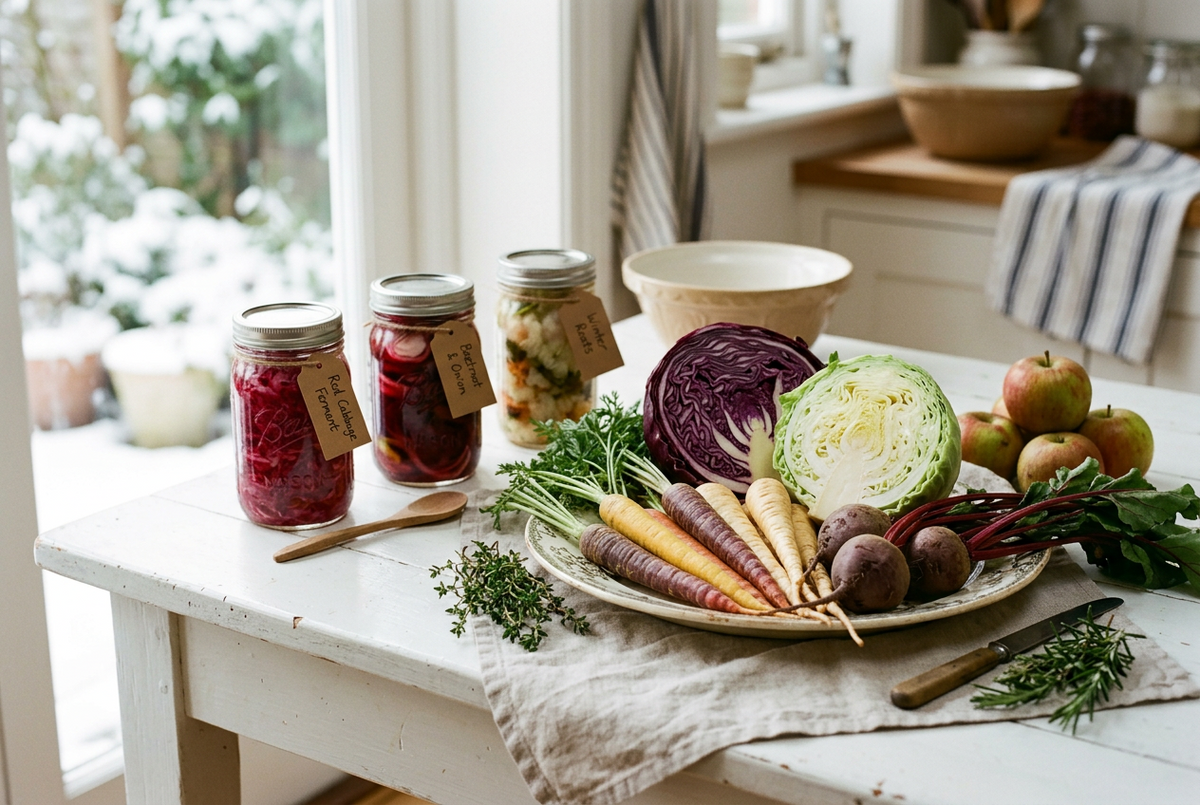


When it gets colder outside, the selection of fresh ingredients in the kitchen also changes. Instead of summer tomatoes and zucchini, cabbage, carrots, beetroot, and root vegetables now take center stage. Many of these ingredients can be wonderfully fermented and bring variety to winter cuisine.
But which vegetables are actually in season in winter? Which ingredients are particularly well suited for fermentation, and what can you make with them? In this article, we introduce typical winter ingredients and show you how you can use them for your own fermentation ideas.
Which foods are in season in winter?
Even in winter, there is a selection of seasonal vegetables in Germany. This includes both varieties that are harvested in the colder months and vegetables that are harvested in autumn and stored over the winter.
You will particularly frequently find various types of cabbage, root vegetables, and tubers in winter cuisine. They can be prepared in many ways and some are also excellent for fermentation.
Typical winter vegetables at a glance
- White cabbage: The classic for homemade sauerkraut. White cabbage can be finely sliced and fermented with salt.
- Red cabbage: With its rich color, it is suitable for aromatic ferments and can be combined with apple or spices, for example.
- Carrots: They bring a slightly sweet note and can be fermented sliced, julienned, or grated.
- Beetroot: The tuber provides an intense color and an earthy taste. It can be fermented sliced or diced.
- Parsnips: This root vegetable has a mild, slightly sweet taste and can be used in combination with other vegetables.
- Celeriac: With its strong aroma, it is suitable as an ingredient for varied vegetable ferments.
- Brussels sprouts: The small cabbage heads can be fermented whole or halved.
- Leek: With its spicy aroma, leek pairs well with various vegetable and spice combinations.
Apples and pears are also frequently available as stored produce in winter. They can give vegetable ferments a fruity note or be used themselves as an ingredient for different fermentation ideas.
Which varieties are actually freshly harvested or offered as stored produce depends on the region and the respective harvest year.
Why are many winter ingredients suitable for fermentation?
Many typical winter vegetables have a firm structure and can be easily sliced, grated, or cut into pieces. This makes them a versatile base for different fermentation ideas.
During the fermentation of vegetables, natural microorganisms become active. In so-called lactic acid fermentation, lactic acid bacteria convert certain sugars. This produces lactic acid and other metabolic products, among others, which change the taste and consistency of the vegetables.
Depending on the type of vegetable, the amount of salt, and the fermentation conditions, completely different aromas are created. Some ferments taste mild and slightly sour, others stronger and more intense.
It is particularly exciting that you can combine different ingredients with each other. This constantly creates new flavors that you can put together according to your preferences.
5 ideas for fermented foods in winter
Would you like to start fermenting yourself? These five combinations are a good inspiration for your winter cuisine.
1. Classic sauerkraut made from white cabbage
Sauerkraut is one of the best-known fermented foods. For the classic version, white cabbage is finely sliced, mixed with salt, and processed so that liquid is released and the vegetables are covered.
For your own version, you can additionally use spices such as caraway, juniper berries, or bay leaves. This allows you to tailor the taste to your preferences.
Pairs well with: Potato dishes, hearty vegetable pans, or as a side dish to winter meals.
2. Fermented red cabbage with apple
Red cabbage and apple are a classic combination in winter cuisine. Both ingredients can also be combined for a vegetable ferment.
Slice the red cabbage into fine strips and add small pieces of apple. Spices such as cinnamon, cloves, or caraway can add additional aromas. Make sure that the vegetables remain completely covered with liquid during fermentation.
Pairs well with: Potatoes, roasted vegetables, or hearty winter dishes.
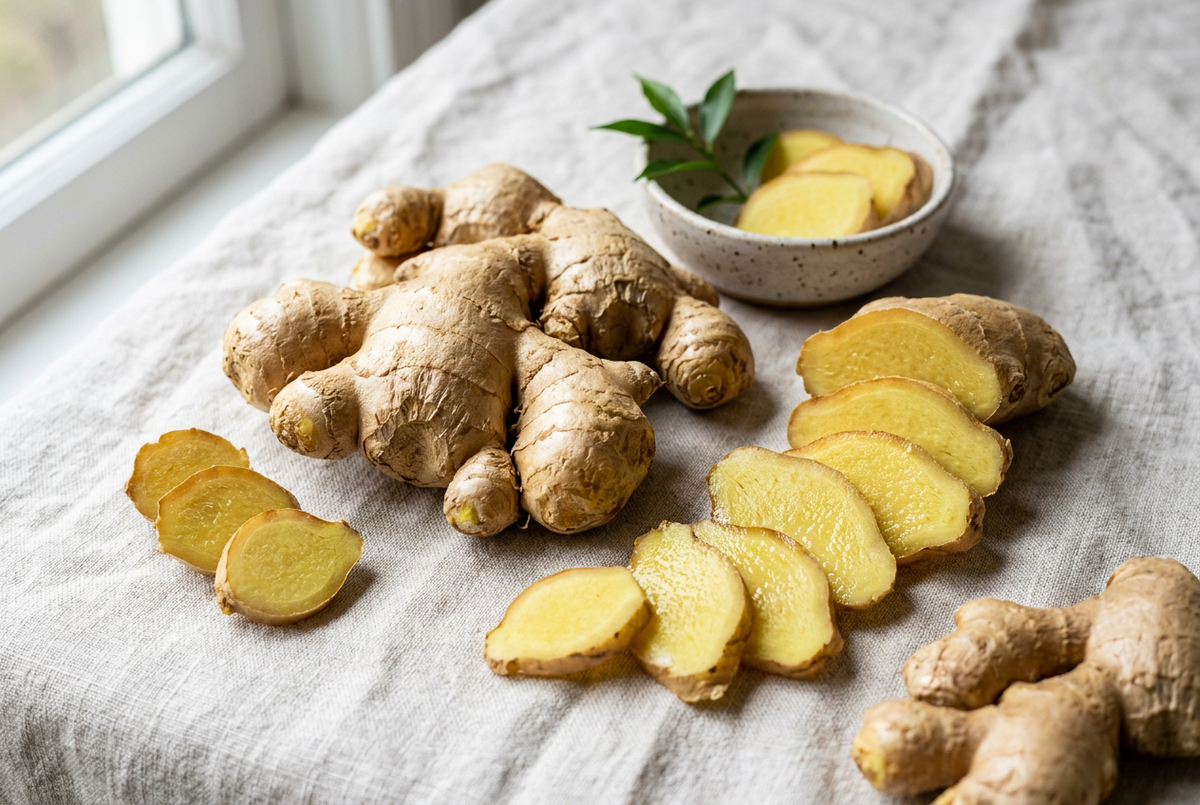
3. Fermented carrots with ginger
Carrots and ginger make a spicy combination with a slightly sweet note. Slice the carrots into sticks or thin slices and add freshly grated or finely chopped ginger.
If you like it a bit more aromatic, you can also add garlic or coriander seeds. The ingredients combine well together and make a versatile vegetable ferment.
Pairs well with: Bowls, salads, rice dishes, or as a spicy side dish.
4. Fermented beetroot with horseradish
Beetroot brings an intense color and a characteristic earthy taste. In combination with horseradish, a particularly spicy ferment is created.
Cut the beetroot into small cubes or thin slices and add some freshly grated horseradish. Depending on your taste, you can supplement the combination with other spices.
Pairs well with: Potatoes, salads, bread, or hearty vegetable dishes.
5. Fermented Brussels sprouts with garlic
Brussels sprouts can also be fermented. You can halve the small cabbage heads or use them whole depending on their size. Together with garlic and pepper, a strong, spicy combination is created.
If you want to try different aromas, you can additionally use mustard seeds or chili.
Pairs well with: Baked potatoes, winter bowls, or as a side dish to hearty dishes.
What should you pay attention to when fermenting in winter?
The season influences not only the selection of ingredients but also the conditions in your kitchen. Especially in winter, the room temperature can play a role if you want to ferment vegetables yourself.
- Use fresh ingredients: Make sure the vegetables are fresh and undamaged, and remove wilted or damaged areas.
- Work cleanly: Clean jars, work surfaces, and kitchen utensils thoroughly before you start fermenting.
- Pay attention to the amount of salt: Use a suitable recipe and stick to the proportions specified there.
- Keep the vegetables covered: During fermentation in brine, the vegetables should remain completely submerged in the liquid. Use a suitable fermentation weight if necessary.
- Consider the temperature: The ambient temperature influences the speed of fermentation. Stick to the temperature specifications of your recipe.
- Check the ferment regularly: Pay attention to changes in smell, appearance, and consistency. If there is visible mold or noticeable spoilage, you should not consume the ferment.
Important: The fermentation of vegetables requires suitable recipes and hygienic working. Do not use arbitrary proportions and refer to proven instructions for the respective type of vegetable.
How can you use fermented winter vegetables?
Fermented vegetables can be integrated into your kitchen in many different ways. You can serve them plain as a side dish or use them as an ingredient in hot and cold dishes.
Here are a few ideas for everyday use:
- As a topping for bowls: Add some fermented red cabbage or carrots to rice, grains, or roasted vegetables.
- In a winter salad: Combine fresh ingredients such as lamb's lettuce and apple with a small portion of fermented vegetables.
- As a side dish: Sauerkraut or fermented beetroot pairs well with many hearty dishes.
- On bread and sandwiches: Carrot or red cabbage ferments bring a spicy component to open-faced sandwiches.
- In wraps and tacos: Use fermented vegetables as an aromatic addition to your favorite ingredients.
Try different combinations and find out which ingredients and aromas you particularly enjoy.
Fermented foods and kombucha: What is the difference?
Both fermented vegetables and kombucha are made with the help of microorganisms. However, the starting ingredients and the respective production processes differ.
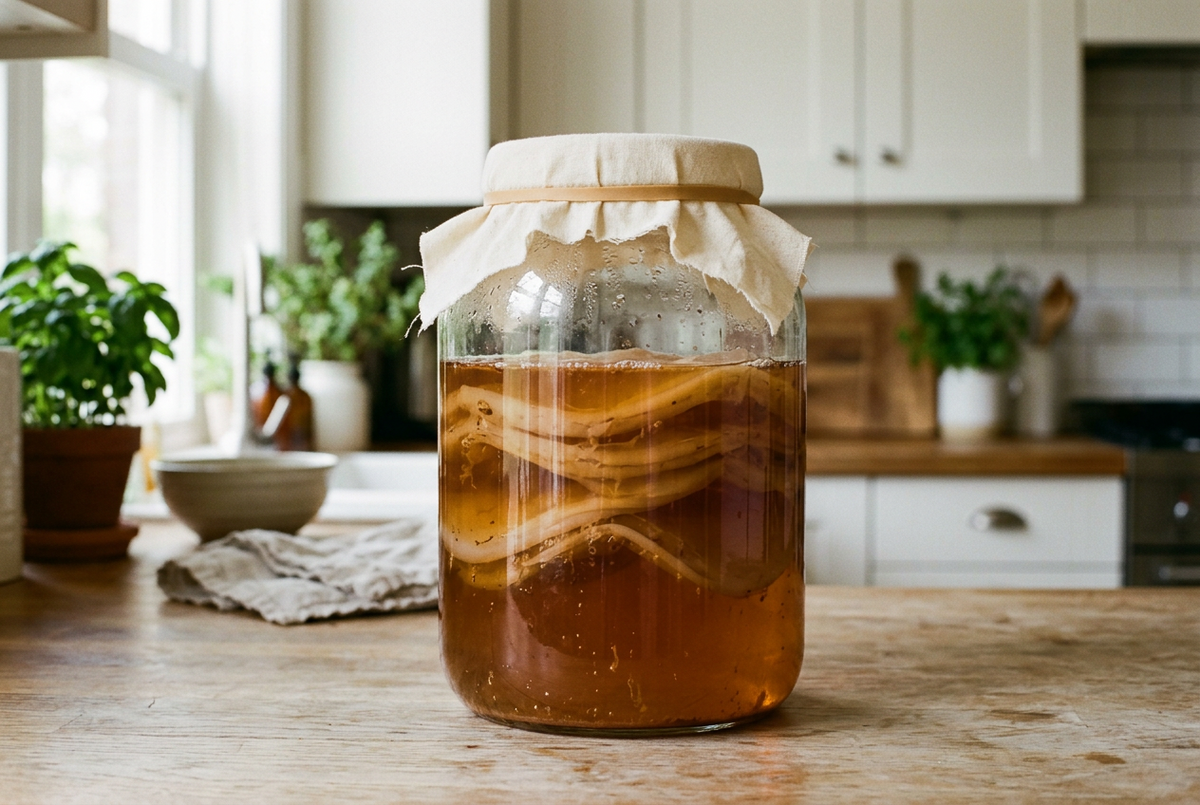
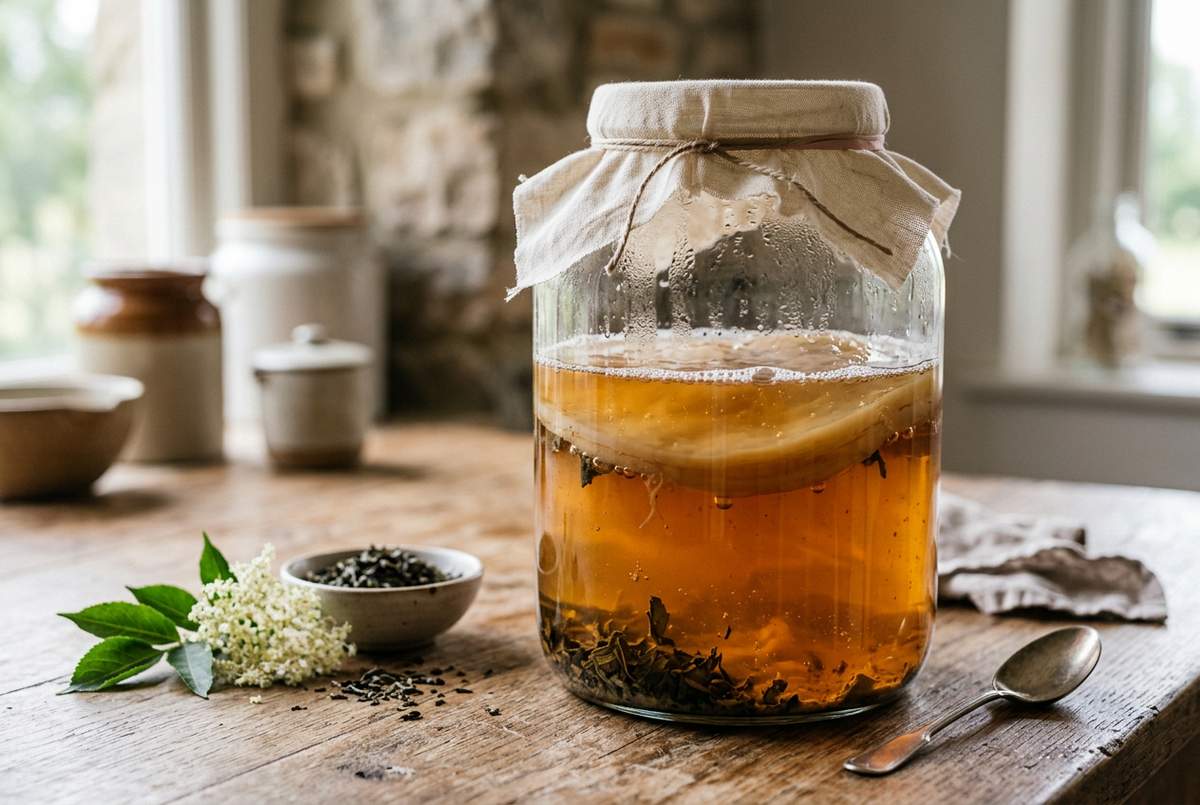
In vegetable ferments, for example, cabbage, carrots, or beetroot are processed with salt and, if necessary, water. In the fermentation of kombucha, sweetened tea forms the base. A culture of yeast and bacteria initiates various metabolic processes in the process.
While lactic acid fermentation is often the focus with vegetable ferments, various yeasts and bacteria work together in kombucha. This creates its own unique flavor profiles.
Both varieties show how differently foods can be processed through fermentation – from spicy sauerkraut to sweet-and-sour kombucha.
Conclusion: Winter vegetables offer many possibilities for fermentation
Even in the winter months, there is a versatile selection of ingredients suitable for fermentation. White cabbage, red cabbage, carrots, beetroot, and Brussels sprouts are just a few examples of vegetables you can use in winter cuisine.
Whether classic sauerkraut, spicy carrots with ginger, or red cabbage with apple: With different combinations, you can always try out new flavors.
If you are interested in fermented foods, it is worth getting to know kombucha as well. Because besides vegetables, tea can also be fermented – and this creates a completely unique taste experience.
Frequently asked questions about fermented foods in winter
Which vegetables can you ferment in winter?
Typical ingredients are white cabbage, red cabbage, carrots, beetroot, parsnips, celeriac, and Brussels sprouts. Leek can also be combined with other vegetables.
Can you ferment red cabbage?
Yes. Red cabbage is suitable for fermentation and can be combined with apple, caraway, or other spices, for example.
Can you ferment carrots in winter?
Yes. Carrots can be fermented sliced, julienned, or grated. Ingredients such as ginger, garlic, or coriander seeds pair particularly well with them.
How long does it take to ferment vegetables?
The duration depends on the type of vegetable, the recipe, and the fermentation conditions. Temperature also plays a role. Therefore, stick to the specifications of a suitable recipe.
Which spices pair well with fermented winter vegetables?
Depending on the type of vegetable, caraway, juniper berries, bay leaves, garlic, ginger, chili, or coriander seeds pair well. Combinations with apple or horseradish are also possible.
Is sauerkraut a fermented food?
Yes. Sauerkraut is created by fermenting finely sliced white cabbage with salt. In the process, lactic acid bacteria convert sugars from the cabbage and produce lactic acid, among other things.
What is the difference between fermented vegetables and kombucha?
Both foods are fermented with the help of microorganisms. In vegetables, lactic acid fermentation is often the focus. Kombucha, on the other hand, is made from sweetened tea and fermented with the help of a culture of yeast and bacteria.









Share: