

Who should drink kombucha?
Kombucha is a fermented tea drink. Fermentation can produce small amounts of alcohol. Depending on the tea used, kombucha may also contain caffeine.
But how is alcohol actually produced in kombucha? How high can the alcohol content be? And what should pregnant women, nursing mothers, and parents consider? Here you will find the most important information about kombucha during pregnancy, during breastfeeding, and for children.
How is alcohol produced in kombucha?
The production of small amounts of alcohol during kombucha fermentation is a natural consequence of the fermentation process.
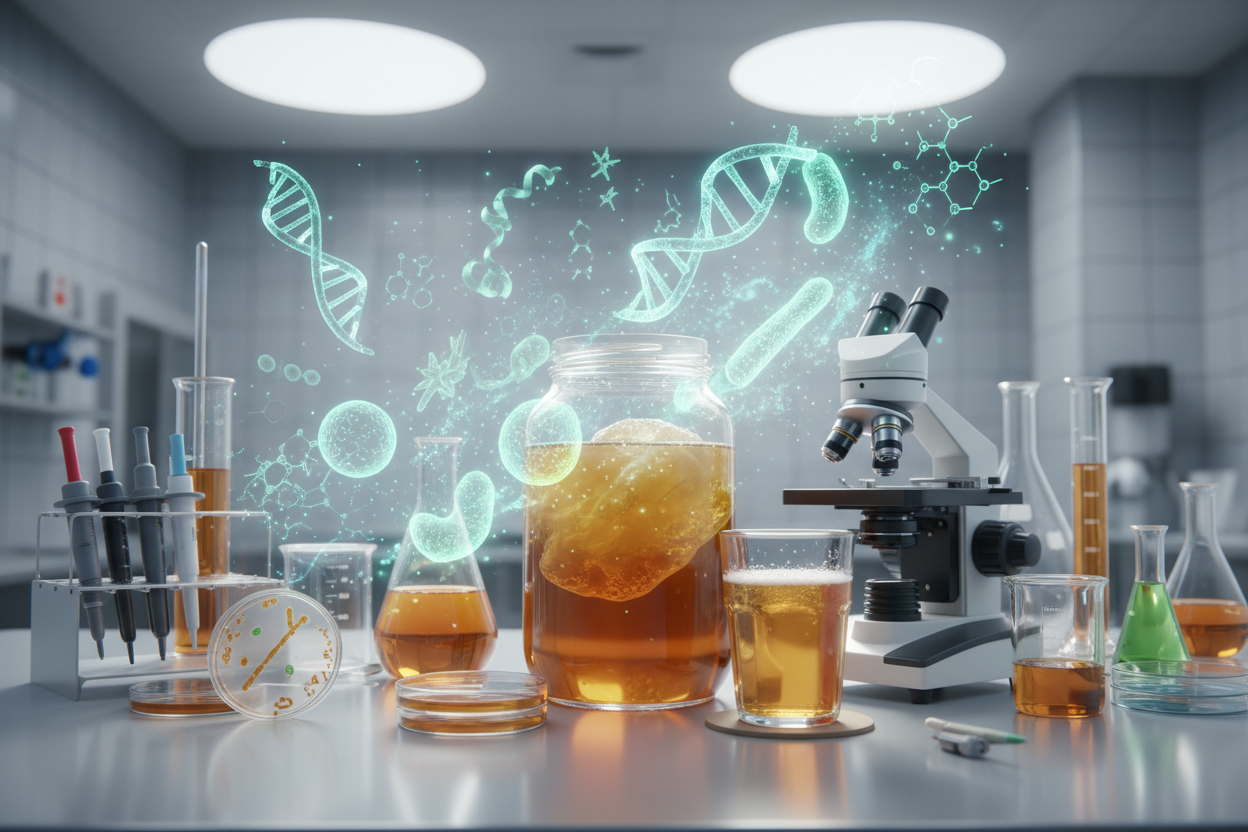
A SCOBY contains a community of various yeasts and bacteria. During fermentation, yeasts metabolize some of the sugar contained in the sweetened tea. This produces ethanol and carbon dioxide, among other substances.
Certain bacteria in the kombucha culture can, in turn, metabolize some of the ethanol produced into organic acids. This interaction, along with other fermentation processes, contributes to kombucha's characteristic sweet and sour taste.
The amount of alcohol in the finished kombucha depends on several factors, including the culture, recipe, temperature, oxygen supply, fermentation time, and storage.
How much alcohol does kombucha contain?
The alcohol content of kombucha can vary depending on how it is made. Especially with homemade kombucha, the fermentation time alone cannot be used to determine a reliable alcohol level.
The culture, sugar content, temperature, oxygen supply, fermentation time, and storage all influence the fermentation process. Without a corresponding measurement, the actual alcohol content of homemade kombucha therefore cannot be determined with certainty.
In commercially produced kombucha, the alcohol content can be monitored through controlled manufacturing processes and appropriate analyses.
Due to the production process, Kombuchery contains only small amounts of alcohol, with a maximum alcohol content of 0.5% ABV. This value applies to Kombuchery and should not be assumed to apply to all kombucha products.
Can pregnant women drink kombucha?
Kombucha may contain small amounts of alcohol. Since it is recommended to avoid alcohol during pregnancy, pregnant women should take this into account when consuming kombucha.
In addition, kombucha is made from tea and may therefore contain caffeine. The amount depends on several factors, including the type of tea used and how it is made.
Anyone who wants to drink kombucha during pregnancy should pay attention to the information provided for the specific product. If in doubt, it is advisable to consult with the treating doctor.
Kombucha during breastfeeding
During breastfeeding, the alcohol and caffeine content may also play a role when choosing drinks.
Since kombucha products can differ in their recipe, alcohol content, and caffeine content, nursing mothers should consider the information provided for the respective product. If needed, individual questions can be discussed with a doctor or a qualified nutrition professional.
Is kombucha suitable for children?
When considering kombucha for children, it should also be taken into account that it may contain small amounts of alcohol and, depending on the tea used, caffeine.
A general daily maximum amount, such as 125 ml, cannot be established for children. Whether kombucha is suitable for a child and in what amount depends on several factors, including age, the specific product, and individual diet.
For young children or if in doubt, it is recommended to discuss the question with a pediatrician.
Kombucha and histamine intolerance
Fermented foods may be tolerated differently by people with histamine intolerance. The composition and individual tolerance of kombucha can also vary.
Therefore, it cannot be said generally that everyone with histamine intolerance must avoid kombucha. Anyone who reacts sensitively to fermented foods or has a diagnosed histamine intolerance should consider their individual tolerance and, if necessary, seek medical or nutritional advice to clarify any questions.
Conclusion: Kombucha, pregnancy, and children
Kombucha is a fermented tea drink, the production of which can result in small amounts of alcohol. It may also contain caffeine due to the tea used.
Due to the production process, Kombuchery contains a maximum of 0.5% ABV alcohol. As a general rule, pregnant women are advised to avoid alcohol. For children, nursing mothers, and people with specific intolerances, individual circumstances should be taken into account.
Anyone who is unsure whether kombucha is suitable for their own diet or that of a child should discuss it with a doctor or a qualified nutrition professional.
Kombucha: The most important information at a glance
- Alcohol: Alcohol can be produced during kombucha fermentation. The actual content depends on how it is made and stored.
- Kombuchery: The alcohol content is a maximum of 0.5% ABV.
- Pregnancy: Since it is recommended to avoid alcohol during pregnancy, pregnant women should consider this when choosing kombucha.
- Breastfeeding: Alcohol and caffeine content should be taken into account when choosing drinks.
- Children: There is no general consumption amount that is suitable for all children.
- Histamine intolerance: Individual tolerance to fermented drinks can vary.
Frequently asked questions about kombucha
Is kombucha alcohol-free?
Not necessarily. Alcohol can be produced during fermentation. The content varies depending on the product and manufacturing process. Kombuchery contains a maximum of 0.5% ABV alcohol.
Can pregnant women drink kombucha with a maximum of 0.5% ABV?
Even kombucha with a low alcohol content is not automatically alcohol-free. Since it is recommended to avoid alcohol during pregnancy, pregnant women should take this into account and seek medical advice if in doubt.
Does kombucha contain caffeine?
Kombucha is often made from black or green tea and may therefore contain caffeine. The amount depends on the tea used and how it is made.
How much kombucha can children drink?
A general maximum amount cannot be established. Since kombucha may contain alcohol and, depending on the recipe, caffeine, age and the specific product should be taken into account. For young children, it is recommended to consult a pediatrician.
Is kombucha suitable for people with histamine intolerance?
This cannot be answered generally. People with histamine intolerance may react differently to fermented foods. Individual tolerance and, if necessary, medical or nutritional advice are the deciding factors.

Share: